
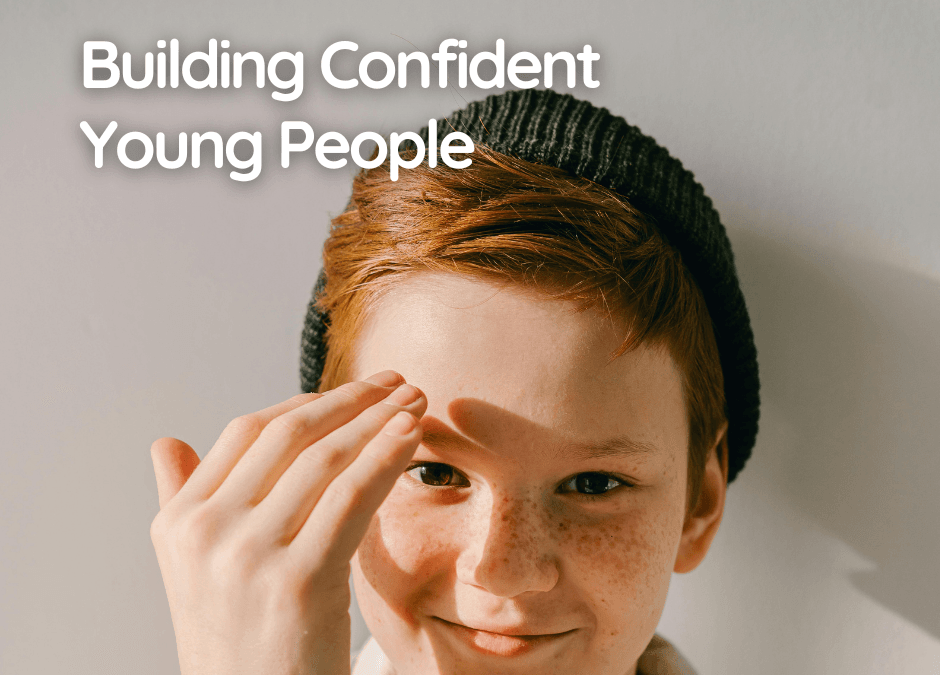
Building Confident Young People – Why Early Support Matters
Confidence is often treated as something that comes with age. We tell ourselves young people will grow out of any anxieties or worries they have as a child and as they hit adulthood, wham, everything can be better. They’ll suddenly and naturally become more secure, more self-assured, and more confident in who they are.
The reality is confidence isn’t something that just appears. Confidence is built and developed over time, and we can all agree that for most of our children, that process is becoming much harder.
They’re growing up in a world of constant comparison, pressure to perform, and fear of getting things wrong. Social media has a part to play, for sure, but it’s not the only reason. Schools, for example, have so much pressure to get the grades, that the pressure is compounded in children when they’re also coping with physical changes and brain developments at the same time.
Even those who seem outwardly ‘fine’ can be quietly struggling with self-doubt, overthinking, and a lack of belief in themselves and this is why early support matters so much.
The benefits of early support
When young people are given the space to understand their thoughts and emotions early on, something powerful happens. They begin to make sense of what’s going on inside their minds, rather than feeling controlled by it.
They learn that:
• setbacks don’t define them
• mistakes are part of learning
• their voice matters
• they are capable of handling challenges
It’s important to realise and understand that these aren’t simply ‘nice ideas’. They are the real building blocks of developing and embedding lasting confidence. Without that support, self-doubt takes root early and grows quietly over time. When it does, it can show up as avoidance, anxiety, low motivation, or a constant need for reassurance.
With the right support, though, young people develop something far more important than surface-level confidence.
They develop trust in themselves…and that changes everything.
They’re more willing to try, more able to cope when things don’t go to plan, more likely to speak up, likely to take opportunities, and majorly, more likely to back themselves.
Early help isn’t about perfection
Because nobody’s perfect, and actually, perfect, fearless lives are boring. We want our children to take leaps of faith sometimes, but we want them to do so feeling steady, capable, and secure in who they are, even when life around them perhaps feels uncertain.
As parents, educators, and professionals, the role we play here is bigger than we often realise.
The small moments matter:
– The conversations where we really listen
– The encouragement we give
– The way we respond when things go wrong
All of these shape how a young person sees themselves.
So I say again, early help is essential
Let’s start early.
Support consistently.
And help build something that lasts far beyond childhood.
If this resonates with you, get in touch. I’d love to support you and the children in your care.